
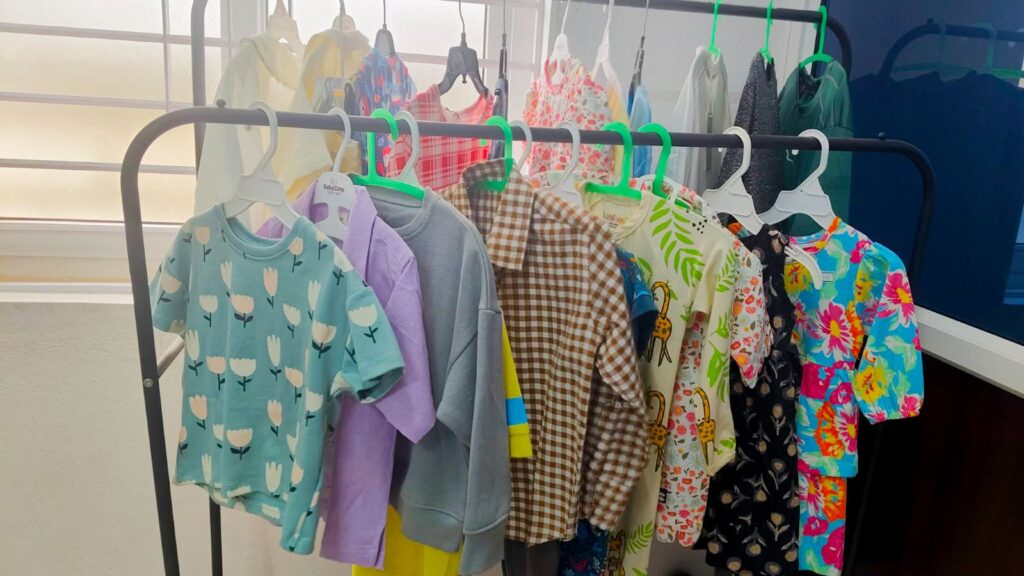
Starting a Children’s Wear brand is exciting, but turning your designs into finished garments requires careful planning. One of the first things you may encounter when working with a clothing manufacturer is MOQ, or Minimum Order Quantity.
For new brands, understanding MOQ can feel confusing. How many pieces should you order? Does every design require a separate minimum quantity? How can you manage production costs without investing too much in inventory?
Understanding the answers can help you plan your first bulk clothing order more confidently, communicate clearly with manufacturers, and build a more sustainable business.
In this guide, we explain what Children’s Wear manufacturing MOQ means, what influences it, and how to plan your first production order effectively.
What Is MOQ in Children’s Wear Manufacturing?
MOQ stands for Minimum Order Quantity. It refers to the smallest quantity of garments a manufacturer is willing to produce or accept in a single order under specified conditions.
For example, a manufacturer may set a minimum quantity for a particular style, colour, fabric, or production batch. The exact requirement varies depending on the factory, garment type, materials, customisation, and production process.
In Children’s Wear manufacturing, MOQ may apply to:
- Style: The minimum number of pieces required for each garment design.
- Colour: The minimum quantity required for each colour option.
- Fabric: The minimum amount of fabric that must be purchased or processed.
- Printing and embroidery: Minimum quantities associated with custom prints, logos, or embroidery.
- Size range: The quantity needed to produce a balanced selection of sizes.
It is important to clarify how a manufacturer’s MOQ is calculated before confirming an order. A minimum quantity for one style may not be the same as a minimum quantity across an entire collection.
Why Do Children’s Wear Manufacturers Set MOQs?
Garment manufacturing involves several stages, including sourcing fabric, preparing patterns, cutting, stitching, finishing, and quality inspection. Many of these processes require time, labour, materials, and equipment before production is complete.
Manufacturers set MOQs to help make these processes commercially practical.
1. Fabric Purchasing and Preparation
Fabric suppliers may sell materials in minimum quantities. When a clothing brand requests a specific fabric, colour, or finish, the manufacturer may need to purchase enough material to complete the production run.
2. Production Setup Costs
Every new design may require pattern preparation, machine adjustments, sample development, and production planning. Producing a larger quantity of the same design can help distribute these setup costs across more garments.
3. Printing, Embroidery, and Customisation
Custom prints, labels, embroidery, and other design details may have their own minimum requirements. Specialised processes can affect the minimum quantity a manufacturer can reasonably produce.
4. Efficient Production Planning
Manufacturers must coordinate workers, machinery, materials, and production schedules. A planned order quantity helps them organise these resources more efficiently.
Understanding these factors helps brands see MOQ as a production consideration rather than simply a restriction.
What Factors Affect MOQ in Children’s Wear Manufacturing?
There is no single MOQ that applies to every Children’s Wear product. Several factors can influence the quantity required for your order.
1. Type of Garment
Simple products, such as basic T-shirts, may have different production requirements from garments with multiple panels, linings, special closures, or detailed embroidery.
Baby rompers, nightwear, co-ord sets, dresses, hoodies, and ethnic wear can all have different material and construction requirements.
2. Fabric Selection
The type, weight, colour, and availability of fabric can affect the minimum order quantity. Standard fabrics that are readily available may offer different options from specially developed or customised materials.
If your design requires a unique fabric, confirm the fabric minimum separately from the garment production minimum.
3. Number of Designs and Colours
Launching a collection with several designs and colour variations can increase production complexity. Each variation may require separate material planning and setup.
For example, ordering 600 garments across six different designs does not necessarily mean each design meets the manufacturer’s MOQ. Always confirm whether the minimum applies per style, per colour, or to the total order.
4. Customisation Requirements
Private-label brands may request customised neck labels, printed logos, branded packaging, special buttons, or embroidery.
These details can affect the cost and minimum quantity. Discuss them early so you can compare the cost of a standard product with the cost of a fully customised garment.
5. Size Range and Size Ratios
Children’s Wear collections often include several age groups and garment sizes. Your order must account for the quantities needed in each size.
A manufacturer may ask you to provide a size ratio or size-wise quantity breakdown. Confirm whether there is a minimum quantity for each size or whether the total quantity can be distributed flexibly.
Custom Children’s Wear vs. Ready-Design Manufacturing: How MOQ Can Differ
The production approach you choose can influence your order requirements.
Custom Children’s Wear manufacturing involves developing garments according to your specifications. You may choose the fabric, colours, measurements, prints, labels, and other design features. This gives your brand more control, but extra development and material requirements may affect MOQ.
Ready-design or standard-product manufacturing may involve selecting an existing design or a product based on available materials and production capabilities. Depending on the manufacturer, this approach may offer different quantity options because some development work is already completed.
Neither option is automatically better for every business. The right choice depends on your budget, brand identity, target audience, and expected demand.
Before deciding, ask the manufacturer to explain the minimum quantity, sample costs, customisation options, and price differences for each approach.
How to Plan Your First Bulk Children’s Wear Order
Your first order should balance product variety, available capital, and realistic customer demand. A clear production plan can help you avoid unnecessary inventory and unexpected expenses.
Step 1: Identify Your Target Customers
Begin by defining who you want to sell to. Are you targeting newborns, toddlers, school-age children, or a combination of age groups?
Consider your customers’ preferences, purchasing habits, climate, and budget. A clearly defined audience helps you choose products that are relevant to your market.
Step 2: Start With a Focused Collection
Launching too many designs at once can make production and inventory management complicated.
Instead, consider starting with a focused range of products that suits your brand. Depending on your audience, this could include everyday T-shirts, cotton co-ord sets, baby rompers, comfortable nightwear, or seasonal clothing.
A smaller collection can make it easier to understand which products attract interest before expanding.
Step 3: Set a Realistic Production Budget
Your production budget should include more than the price of each garment.
Remember to account for:
- Fabric and garment manufacturing costs.
- Sampling and design development.
- Labels, tags, printing, and packaging.
- Quality checks and any required testing.
- Shipping, customs duties, and taxes where applicable.
- Website, marketing, storage, and fulfilment expenses.
- A contingency amount for unexpected costs.
For international orders, clarify which shipping and delivery terms apply and who is responsible for freight, insurance, duties, and taxes.
Step 4: Confirm MOQ Before Finalising Designs
Contact potential manufacturers with your product requirements and ask for their minimum quantities.
Clarify whether the MOQ applies per design, colour, fabric, size, or total order. Also ask whether the manufacturer offers any flexibility for a first order.
Getting these details before finalising your collection helps you design within your actual production budget.
Step 5: Plan Your Size-Wise Quantity
Estimate demand across the sizes you intend to sell. Use previous sales data if available. If you are launching for the first time, research your target market and treat your initial size allocation as a test rather than a guaranteed forecast.
For example, if you plan to order 300 garments, first determine whether your manufacturer allows that quantity to be split across your selected designs and sizes. Then create a size-wise breakdown that reflects your expected demand.
The figures should be agreed with your manufacturer; do not assume every size or style can be ordered in any quantity.
Step 6: Request Samples Before Bulk Production
A sample allows you to evaluate the garment before committing to a large order.
Check important details such as:
- Fabric softness, weight, and suitability.
- Measurements and fit across the intended age groups.
- Stitching, seams, finishing, and durability.
- Colour consistency and print quality.
- Buttons, zippers, labels, and other accessories.
- Comfort and age-appropriate safety considerations.
Approve the final sample and document any changes before bulk production begins. For children’s garments, also confirm the safety and compliance requirements relevant to your target market.
Step 7: Calculate the Expected Selling Price
Your selling price must cover the total cost of bringing each garment to your customer, not only the manufacturing price.
Include packaging, shipping, payment processing, marketing, taxes where applicable, and expected returns or exchanges when calculating profitability.
Ask your manufacturer for quotations at different quantities if possible. A higher order may reduce the cost per garment, but it is only worthwhile if the additional stock can realistically be sold.
Step 8: Agree on the Production Timeline
Confirm the time needed for sampling, material sourcing, bulk production, quality inspection, packing, and dispatch.
If you are planning a seasonal collection, work backwards from your intended launch date and allow a reasonable buffer for delays. Get the expected timeline and key approval stages in writing.
Common MOQ Mistakes Children’s Wear Brands Should Avoid
Even a well-designed collection can become difficult to manage if production quantities are not planned carefully.
Avoid these common mistakes:
- Choosing quantity based only on a lower unit price: A cheaper garment can become expensive if much of the stock remains unsold.
- Assuming MOQ applies to the total order: It may apply separately to each style, colour, or customisation.
- Ordering too many designs at launch: Too many variations can divide your budget and make demand harder to predict.
- Ignoring size-wise demand: Excess stock in some sizes and shortages in others can affect sales.
- Skipping sample approval: Differences in fit, fabric, or finishing may become costly when discovered after bulk production.
- Overlooking extra costs: Packaging, freight, testing, duties, and marketing can affect the overall budget.
- Failing to document specifications: Written approval of measurements, materials, colours, labels, and delivery dates helps prevent misunderstandings.
Careful planning does not eliminate every production risk, but it gives your business a stronger foundation.
Questions to Ask Your Children’s Wear Manufacturer Before Placing an Order
Before confirming your first bulk clothing order, discuss the following points with your manufacturing partner:
- What is the MOQ for each garment style?
- Does the MOQ apply per colour, fabric, or design?
- Can I distribute the order across multiple sizes?
- Are custom labels, prints, or embroidery subject to separate minimums?
- What are the sample development costs and timelines?
- What payment terms and production milestones apply?
- What quality checks are performed before dispatch?
- Can you provide a detailed quotation for different order quantities?
- What happens if there are defects or discrepancies in the finished garments?
- What documentation and product testing are needed for my target market?
Clear answers help you compare manufacturers on more than price alone. Look at communication, product quality, transparency, production capability, and delivery planning as well.
How to Choose the Right Children’s Wear Manufacturing Partner
The right manufacturer should understand your product requirements and help you make informed production decisions.
Look for a partner that can explain MOQ clearly, provide realistic quotations, communicate material and production requirements, and discuss quality expectations before work begins.Children’s Wear
For international brands, it is also useful to confirm export experience, packaging requirements, product testing, shipping arrangements, and destination-market regulations.
A reliable manufacturing relationship is built on shared expectations. When both sides understand the design, quantity, quality standards, cost, and timeline, it becomes easier to plan future collections and scale production as demand grows.
Why Choose Cottono Kids for Children’s Wear Manufacturing?
Choosing a suitable manufacturing partner is an important step in building a successful children’s clothing brand. Cottono Kids works with domestic and international brands and offers children’s apparel manufacturing across a range of categories, including T-shirts and tops, onesies, hoodies, nightwear, co-ord sets, and ethnic wear.
Here are some factors brands can discuss with Cottono Kids when planning a collection:
- A range of Children’s Wear categories: Explore product options for different age groups and clothing needs.
- Customisation support: Discuss your preferred designs, fabrics, labels, and garment details with the team.
- Production communication: Clarify order requirements, progress updates, and expected delivery timelines.
- Quality and comfort considerations: Review fabric choices, garment construction, finishing, and relevant children’s product requirements.
- End-to-end support: Ask about the available services for material sourcing, production, packaging, and other requirements for your project.
Before placing an order, share your designs, target quantities, size range, and budget to confirm the available production options and MOQ for your specific requirements.
Visit Cottono Kids to learn more about its Children’s Wear manufacturing services and discuss your next collection.
Final Words
Understanding Children’s Wear manufacturing MOQ helps you make better decisions about product selection, production budgets, and inventory planning. The goal is not simply to order the largest quantity at the lowest price. It is to choose an order size that supports your business objectives while keeping costs and stock levels manageable.
Start with a clear target audience, a focused collection, an agreed size breakdown, and approved samples. Ask manufacturers to explain their MOQ and quotation structure before confirming production.
With careful planning and the right manufacturing partner, your first bulk clothing order can become a practical starting point for building and growing your Children’s Wear brand.